Time is the one resource we can’t manufacture, yet most of us spend it like we have an infinite supply. We lose minutes to "quick" email checks and hours to decision fatigue.
But saving time isn’t about working faster; it’s about eliminating friction. If you can reclaim just 90 minutes a day, you’ve found your 10 hours. Here are three high-impact habits to get them back.
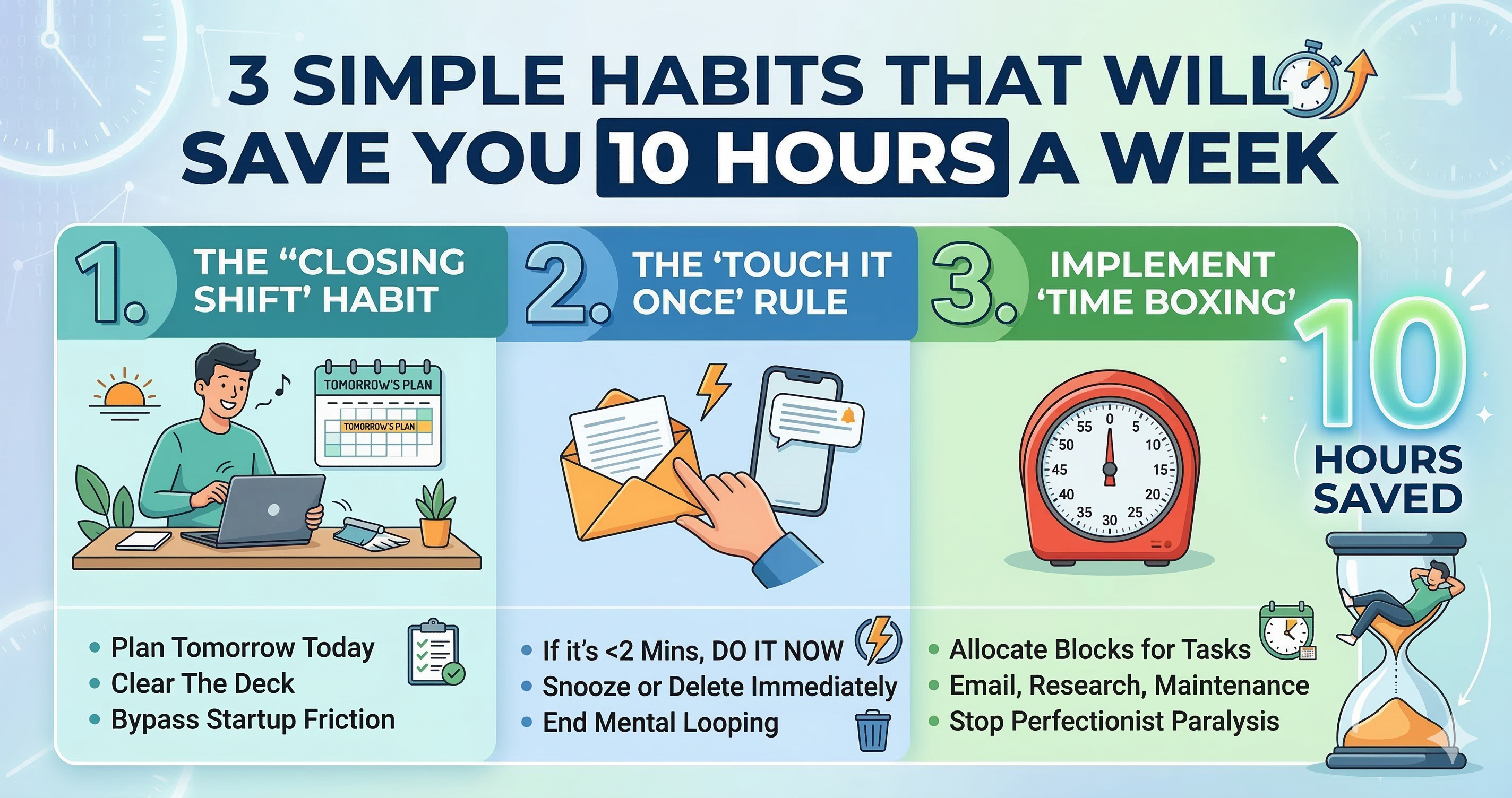
1. The "Closing Shift" Habit
Most people start their day by figuring out what they need to do. By the time you’ve cleared your inbox and decided on a priority, you’ve already burned 45 minutes of your peak mental energy.
The Habit: Spend the last 10 minutes of your workday performing a "Closing Shift."
- Clear the deck: Close all those browser tabs.
- The Big Three: Write down the three most important tasks for tomorrow.
- The Triage: Archive or snooze any non-essential emails.
Why it works: You bypass "startup friction." When you sit down the next morning, your brain doesn't have to choose what to do—it just starts doing.
2. Implement a "Touch It Once" Rule
We often "process" the same piece of information five times. You read a text, think about it, close it, read it again later, and finally reply. That’s a massive time leak.
The Habit: If a task takes less than two minutes (an RSVP, a quick Slack reply, filing a receipt), do it the moment you encounter it. If it takes longer, immediately schedule it or add it to a formal to-do list and move on.
- Don't leave emails marked "unread" as a reminder.
- Don't leave mail on the kitchen counter.
- Do make a definitive decision the first time you "touch" the item.
3. Practice "Time Boxing" for Low-Value Tasks
Parkinson’s Law states that work expands to fill the time available for its completion. If you give yourself all afternoon to research a new vacuum cleaner, it will take all afternoon.
The Habit: Set a literal timer for "maintenance" tasks.
- Email: 30 minutes, twice a day.
- Social Media: 15 minutes of intentional scrolling.
- Research: 20 minutes to find a solution, then make the call.
Pro-Tip: Use a physical kitchen timer or a desktop app. The visual countdown creates a healthy sense of urgency that prevents "perfectionist paralysis."
The Bottom Line
If you implement these three habits, you aren't just working harder—you're removing the "hidden" hours spent on indecision and clutter.
- Closing Shift: Saves 5 hours/week in momentum.
- Touch It Once: Saves 3 hours/week in mental looping.
- Time Boxing: Saves 2+ hours/week in distractions.